2026年1月23日
3D ACADEMY offers affordable English study programs in Cebu, Philippines – perfect for beginners, professionals, and exam takers.

3D UNIVERSAL ENGLISH INSTITUTE INC
info.3d-universal.com
8:00-17:00(Mon-Fri)
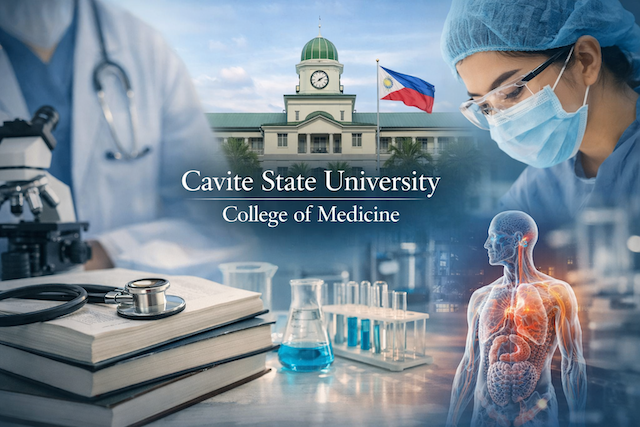
Cavite State University College of Medicine
Contents
- Cavite State University College of Medicine
- Introduction
- University Context and Location
- Mission and Public-Service Orientation
- Doctor of Medicine (MD) Program Overview
- Curriculum Design and Learning Approach
- Community-Based and Public Health Training
- Clinical Training and Hospital Exposure
- Admission Requirements and Selection Considerations
- Tuition, Affordability, and Financial Considerations
- Scholarships and Return Service Expectations
- Facilities and Learning Resources
- Student Life and Academic Environment
- Path to Licensure and Career Opportunities
- Who Should Consider Cavite State University College of Medicine
- Conclusion
- Frequently Asked Questions (FAQs)
- Is Cavite State University College of Medicine a public medical school?
- What degree does the college offer?
- How long is the Doctor of Medicine program?
- Is the NMAT required for admission?
- Who is eligible to apply?
- Does the college prioritize students from Cavite?
- How much is the tuition, and is the program affordable?
- Are scholarships available, and do they require return service?
- What kind of learning approach can students expect?
- Where do students complete clinical clerkship and hands-on training?
- Does the program include community immersion or public health activities?
- What facilities and resources are typically available to medical students?
- Can graduates take the Physician Licensure Examination (PLE) after completing the program?
- What career paths are common after graduation?
Cavite State University College of Medicine
Introduction
Cavite State University College of Medicine (CvSU-COM) is a public medical school located at the main campus of Cavite State University in Indang, Cavite, Philippines. The college was established as part of a broader national effort to expand access to medical education and to help address the uneven distribution of physicians across the country. As a state university medical school, CvSU-COM places strong emphasis on public service, community engagement, and socially responsive medical training.
The College of Medicine began accepting students in the early 2020s, making it one of the newer state-funded medical schools in the Philippines. Despite its relatively recent establishment, the program follows nationally recognized standards for medical education and is designed to prepare students for clinical practice, postgraduate internship, and eventual physician licensure.
University Context and Location
Cavite State University is a long-established public university with multiple campuses across the province of Cavite. The main campus in Indang provides a quieter and more spacious environment compared to highly urbanized medical school locations. For medical students, this setting can be beneficial, as it allows for focused study and reduced distractions during the academically demanding years of medical training.
The location of the university also influences the type of clinical and community exposure students receive. Cavite’s mix of urbanizing towns, rural communities, and proximity to Metro Manila creates opportunities for diverse patient encounters and public health experiences. Medical students may gain insights into both provincial healthcare delivery and referral-based systems connected to larger hospitals.
Mission and Public-Service Orientation
The Cavite State University College of Medicine is rooted in the principle that medical education should serve the broader needs of society. Like many public medical schools in the Philippines, its mission is closely aligned with national healthcare priorities, including the development of physicians who are willing and able to serve in government hospitals, rural health units, and underserved communities.
This public-service orientation shapes the curriculum, student selection priorities, and training environment. Students are encouraged to view medicine not only as a profession but also as a form of public service that carries ethical, social, and civic responsibilities. Community health, preventive medicine, and primary care are treated as core elements of physician training rather than optional interests.
Doctor of Medicine (MD) Program Overview
The Doctor of Medicine (MD) program at Cavite State University follows the standard structure used in Philippine medical education. The program spans four academic years, followed by a mandatory one-year postgraduate internship before graduates may take the Physician Licensure Examination.
- First and Second Years: Foundational medical sciences, including anatomy, physiology, biochemistry, pathology, pharmacology, and microbiology, often integrated through organ-system or thematic approaches
- Third Year: Core clinical subjects such as internal medicine, surgery, pediatrics, obstetrics and gynecology, psychiatry, and community medicine
- Fourth Year: Clinical clerkship with full-time hospital rotations across major departments
The program is designed to progressively develop medical knowledge, clinical reasoning, communication skills, and professional behavior, preparing students for real-world clinical responsibilities.
Curriculum Design and Learning Approach
CvSU College of Medicine adopts a learner-centered and outcomes-based approach to medical education. Traditional lectures are combined with small-group discussions, case-based learning, practical laboratory sessions, and early clinical exposure. This blended approach helps students connect theoretical knowledge with clinical application.
Ethics, professionalism, and patient-centered care are emphasized throughout the curriculum. Students are trained to consider not only disease processes but also the social, cultural, and economic factors that influence health outcomes. This perspective is particularly important for future physicians who may work in community and public-sector settings.
Community-Based and Public Health Training
Community medicine and public health are integral components of the MD program at Cavite State University. Students are exposed to population-based healthcare concepts, including disease prevention, health promotion, and community diagnosis. These activities help students understand healthcare delivery beyond hospital walls.
Community immersion experiences may include collaboration with local health offices, participation in outreach programs, and engagement with rural or semi-urban communities. Such experiences are intended to build awareness of health disparities and to strengthen students’ commitment to serving diverse populations.
Clinical Training and Hospital Exposure
Clinical training is a central pillar of medical education. Students at CvSU College of Medicine complete their clerkship in affiliated hospitals and healthcare facilities, which commonly include government hospitals, district hospitals, and community health centers.
Training in public healthcare facilities exposes students to a wide range of medical conditions, often with high patient volume and varied case complexity. This environment allows students to develop clinical confidence, procedural skills, and adaptability while working under the supervision of licensed physicians and consultants.
Admission Requirements and Selection Considerations
Admission to Cavite State University College of Medicine is competitive. Applicants are generally required to hold a bachelor’s degree from a recognized institution and to submit a valid National Medical Admission Test (NMAT) score that meets the school’s minimum cutoff for the admission cycle.
- Bachelor’s degree and Transcript of Records
- NMAT score within the accepted validity period
- Certificate of good moral character
- Medical clearance and other required documents
Because the college emphasizes public service, applicants who demonstrate commitment to community health, leadership experience, or alignment with the school’s mission may be viewed favorably during the selection process.
Tuition, Affordability, and Financial Considerations
As a state university, Cavite State University College of Medicine offers a more affordable tuition structure compared to many private medical schools. Eligible students may benefit from government tuition support programs, subject to compliance with academic and administrative requirements.
Despite lower tuition, students should plan for additional expenses such as housing, transportation, books, medical equipment, uniforms, and clinical rotation costs. Financial planning is essential, particularly during clinical years when schedules may limit part-time work opportunities.
Scholarships and Return Service Expectations
Various scholarships and financial assistance programs may be available to medical students, including those supported by government agencies or local government units. Some scholarships are tied to return service obligations, requiring graduates to work in designated public healthcare facilities after licensure.
Students considering scholarship programs should carefully review the terms and conditions, including service duration, performance requirements, and consequences of non-compliance. Understanding these obligations early helps ensure informed decision-making.
Facilities and Learning Resources
The College of Medicine provides access to essential learning facilities, including lecture halls, laboratories, and skills training areas. Skills laboratories and simulation-based learning activities support the development of clinical and procedural competencies in a controlled environment.
Students also benefit from access to the broader university library system and digital learning resources, including online medical references and academic journals that support self-directed study and research.
Student Life and Academic Environment
Medical student life at Cavite State University is academically intensive and demands strong time management and resilience. The campus environment supports focused study, while student organizations and peer groups provide opportunities for collaboration, leadership development, and mutual support.
Students are encouraged to maintain healthy routines, seek mentorship, and build supportive peer networks to manage the physical and emotional demands of medical training.
Path to Licensure and Career Opportunities
Graduates of Cavite State University College of Medicine must complete a postgraduate internship before taking the Philippine Physician Licensure Examination. Upon passing the licensure exam, graduates may practice medicine as licensed physicians.
Career pathways include general practice, residency training in various specialties, employment in government hospitals, service in rural health units, or participation in public health programs. The community-oriented training background is particularly valuable for physicians pursuing careers in public-sector and primary-care settings.
Who Should Consider Cavite State University College of Medicine
CvSU College of Medicine is well suited for students who seek affordable medical education within a public university setting and who are motivated by service-oriented practice. It is an appropriate choice for individuals interested in community health, government service, and long-term contributions to the Philippine healthcare system.
Conclusion
Cavite State University College of Medicine represents a growing and mission-driven option for aspiring physicians in the Philippines. With its emphasis on public service, community engagement, and accessible medical education, the college plays an important role in addressing healthcare needs at the provincial and national levels. For students who value socially responsive medicine and are prepared for the demands of rigorous training, CvSU College of Medicine offers a meaningful pathway toward a medical career.
Frequently Asked Questions (FAQs)
Is Cavite State University College of Medicine a public medical school?
Yes. Cavite State University (CvSU) is a state university, and its College of Medicine is part of a publicly funded institution. This typically means the program is designed to support regional healthcare needs, expand access to medical education, and produce physicians who can serve in public and community settings. As with other public medical schools, policies on admission, academic progression, and training requirements are guided by national higher-education and medical-education standards.
What degree does the college offer?
The primary professional program is the Doctor of Medicine (MD). The MD program is the standard medical degree in the Philippines and is the academic pathway that leads to clinical clerkship, a postgraduate internship, and eventual eligibility to take the Physician Licensure Examination (PLE), subject to meeting all requirements set by the school and relevant authorities.
How long is the Doctor of Medicine program?
In the Philippines, the MD program is commonly structured as four academic years, followed by a one-year postgraduate internship in an accredited training hospital. The first years emphasize foundational and integrated medical sciences, while later years focus on clinical subjects and hands-on training. Students should confirm the latest academic calendar and curriculum sequence directly with the college, since implementation details can evolve.
Is the NMAT required for admission?
In most Philippine medical schools, the National Medical Admission Test (NMAT) is a standard admissions requirement. Applicants are typically asked to submit an NMAT percentile rank that meets the school’s minimum cutoff for the admission cycle. Because cutoffs and policies can change depending on competitiveness and capacity, prospective students should check the current NMAT requirement, the accepted test validity period, and the application deadlines announced by the college.
Who is eligible to apply?
Applicants generally need a recognized bachelor’s degree (or its equivalent), complete required documents, and satisfy academic and character requirements such as transcripts and a certificate of good moral character. Some schools also require specific prerequisite coursework or demonstrate preference for applicants aligned with their mission, such as commitment to community medicine. It is best to review the official admissions checklist and confirm any prerequisites before applying.
Does the college prioritize students from Cavite?
Many state medical schools were created to strengthen local and regional healthcare systems, so it is common to see a focus on serving residents of the province or nearby areas. Priority policies can differ by institution and by year, and may be connected to scholarship slots, local government partnerships, or return-service expectations. If you are from outside Cavite, you can still apply, but you should prepare a strong application that clearly explains your motivation and readiness for community-oriented training.
How much is the tuition, and is the program affordable?
Public medical schools are often more affordable than private institutions, although total costs still include living expenses, transportation, books, supplies, uniforms, and clinical requirements. In the Philippines, some students may qualify for tuition support under government education programs, depending on eligibility and compliance rules. Because fee structures and subsidy coverage can vary, applicants should request an updated breakdown of tuition and miscellaneous fees and plan a realistic budget for the full duration of medical training.
Are scholarships available, and do they require return service?
Scholarships may be offered through government agencies, local government units (LGUs), or partner institutions. In many cases, funded scholarships—especially those aimed at strengthening provincial healthcare—may include a return-service agreement after graduation or after licensure. This means scholars may be expected to work in specific public hospitals, rural health units, or underserved areas for a defined period. Always read scholarship terms carefully so you understand service obligations, maintaining-grade requirements, and repayment clauses if conditions are not met.
What kind of learning approach can students expect?
Modern medical education increasingly combines lectures with small-group learning, case discussions, skills laboratory sessions, and early clinical exposure. A community-oriented program may also emphasize public health, preventive medicine, ethics, and communication skills. Students should expect a heavy workload, regular assessments, and the need for consistent self-study. The best preparation is developing strong study habits, time management, and resilience before the first year begins.
Where do students complete clinical clerkship and hands-on training?
Clinical clerkship is usually completed in affiliated hospitals and training facilities. For a state university medical school, these sites often include government hospitals, district hospitals, and community health facilities such as rural health units. This environment can provide broad exposure to common conditions, emergency cases, and public health realities. Because affiliations can expand or change, applicants should verify the current list of training hospitals, the clerkship structure, and how rotations are scheduled across major clinical departments.
Does the program include community immersion or public health activities?
Many mission-driven state medical schools integrate community immersion, health education, and population-based activities throughout the curriculum. Students may participate in community diagnosis, health surveys, outreach clinics, preventive campaigns, and coordination with local health offices. These experiences help future doctors understand social determinants of health and strengthen their ability to work in multidisciplinary teams in real community settings.
What facilities and resources are typically available to medical students?
Medical students generally use a mix of classrooms, laboratories, skills or simulation labs, and library resources. Simulation training can help students practice clinical skills in a safe environment before working with real patients. Students may also use online learning platforms, digital references, and journal databases. Since facilities improve over time, prospective students should attend orientations, request a campus tour if possible, or review official updates to understand the current learning environment.
Can graduates take the Physician Licensure Examination (PLE) after completing the program?
Graduates who complete the MD degree and the required postgraduate internship are typically eligible to take the Physician Licensure Examination, provided they meet all requirements set by the school and licensing authorities. Passing the PLE is required to practice medicine as a licensed physician in the Philippines. Students should treat licensure preparation as a long-term process that starts early, built on consistent mastery of foundational concepts and clinical reasoning.
What career paths are common after graduation?
After licensure, graduates may work as general practitioners, enter residency training in a specialty, or serve in government and community health programs. Those who receive scholarships with return-service obligations may begin service in assigned public facilities. Over time, many physicians pursue specialization, research, academe, hospital administration, or public health leadership. A community-oriented training background can be especially valuable for careers that involve primary care, rural medicine, and public sector service.
Complete List of Medical Schools in the Philippines (All 78 MD Programs)
Best Medical Schools in the Philippines (Local & International Rankings)
Recommend
2026年1月23日
Sultan Kudarat State University College of Medicine: Complete Guide for Aspiring MD Students
2026年1月23日
University of Southern Mindanao College of Medicine: Complete Guide for Aspiring MD Students
2026年1月23日
Mindanao State University – General Santos College of Medicine: Complete Guide for Future MD Students

How to Register for eTravel Philippines (2025 Guide)
Step-by-step guide to completing your eTravel registration before arriving in the Philippines, with images and tips.

Night Market in Cebu – Things You Don’t Know About Cebu Life
Discover the hidden charm of Cebu’s night markets, from street food stalls to local life tips you won’t find in tourist guides.

How to Use ChatGPT for IELTS Preparation: A Complete Guide
Learn how to prepare for IELTS using ChatGPT — including strategies for Writing, Reading, Listening, Speaking, and grammar support.

How to Build a Website Without Coding Using ChatGPT
Discover how to build your own website using AI—no coding skills needed. From structure planning to SEO and design, let ChatGPT guide you.