2026年1月23日
3D ACADEMY offers affordable English study programs in Cebu, Philippines – perfect for beginners, professionals, and exam takers.

3D UNIVERSAL ENGLISH INSTITUTE INC
info.3d-universal.com
8:00-17:00(Mon-Fri)
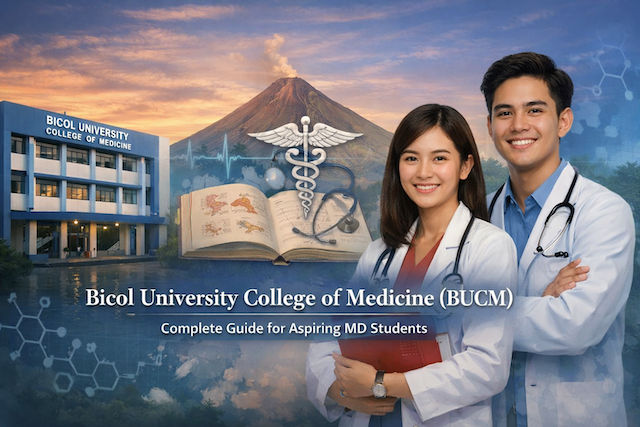
Bicol University College of Medicine (BUCM): Complete Guide for Aspiring MD Students
Contents
- Bicol University College of Medicine (BUCM): Complete Guide for Aspiring MD Students
- Quick Overview of BUCM
- Why Study Medicine in Legazpi and the Bicol Region?
- MD Program Structure in the Philippines (What to Expect)
- Academic Environment and Learning Approach
- Admissions: General Eligibility and Common Requirements
- NMAT Strategy: How to Prepare in a Practical Way
- Scholarships and Financial Support: What Applicants Should Know
- Clinical Training and Hospital Exposure
- Student Life, Support Systems, and Wellness
- Costs and Budgeting: A Practical Checklist
- Career Path After BUCM: Internship, Licensure, and Beyond
- How to Strengthen Your Application to BUCM
- Tips for Succeeding Once You’re In
- How to Get Official Updates and Contact the School
Bicol University College of Medicine (BUCM): Complete Guide for Aspiring MD Students
Bicol University College of Medicine (BUCM) is a public medical school based in Legazpi City, Albay, in the Bicol Region of the Philippines. As part of a state university, BUCM is often associated with a strong “public service” mission—training future physicians who understand community health realities and who are prepared to serve in areas that need doctors the most. If you’re exploring where to take your Doctor of Medicine (MD) degree, this guide walks you through what to expect from BUCM, how admissions typically work, how medical training is structured in the Philippines, what scholarships may be available, and how to prepare for the journey from pre-med to physician.
This article is written for prospective students (and families) who want a clear, practical overview. Specific requirements and timelines can change from year to year, so treat this as a “big picture” map of BUCM and verify details through official channels before submitting an application.
Quick Overview of BUCM
BUCM is the College of Medicine of Bicol University, a major public university in the region. Because it is part of a state university system, many students consider BUCM for its reputation, public-oriented training, and access to government-supported scholarships for medical education. The campus environment places you close to a real-world healthcare setting in a regional hub city, which can be a major advantage for clinical exposure.
Like most Philippine medical schools, BUCM’s MD program follows a structured pathway: foundational medical sciences, integrated organ-system learning, clinical skills training, and hospital/community exposure that expands over time. Your end goal after completing the MD program is eligibility to take the Philippine Physician Licensure Examination (PLE), after completing the required clinical internship year in an accredited facility.
Why Study Medicine in Legazpi and the Bicol Region?
Location matters more than many applicants realize. Training in a regional center like Legazpi can offer several practical advantages:
- Closer connection to community health needs: Regional training often emphasizes public health realities—maternal and child health, infectious diseases, chronic disease management, and rural healthcare delivery.
- Potentially broader clinical exposure: In many settings outside the biggest metropolitan areas, students can see a wide range of cases, often with meaningful hands-on learning (within supervised training limits).
- Cost-of-living considerations: Compared with some large urban centers, living costs may be more manageable depending on your housing and lifestyle choices.
- Regional professional network: If you plan to practice in Bicol or nearby provinces, medical school is one of the best places to build relationships with mentors, hospitals, and future colleagues.
At the same time, you should be ready for the realities of medical school anywhere: heavy academic demands, long hours, and a schedule that often limits part-time work. Choosing a location where you can focus, stay supported, and access good clinical training is a major strategic decision.
MD Program Structure in the Philippines (What to Expect)
Philippine medical education commonly includes:
- Years 1–2 (Pre-clinical): Foundational sciences (anatomy, physiology, biochemistry, microbiology, pathology, pharmacology) plus early clinical skills (history-taking, physical exam basics, communication, professionalism, and ethics).
- Years 3–4 (Clinical/Integrated): More intensive clinical medicine (internal medicine, pediatrics, surgery, obstetrics and gynecology, psychiatry, family and community medicine, neurology, radiology, etc.), case discussions, and expanded hospital/community exposure.
- Post-MD internship year: A supervised clinical internship in an accredited hospital is typically required before taking the PLE.
Within that structure, each medical school designs its sequence, assessments, and clinical partnerships. You should expect BUCM—like other Philippine medical schools—to use a combination of lectures, small group sessions, labs, skills practice, hospital/community exposure, and examinations. Many schools now emphasize outcomes-based education: not only “knowing facts,” but also demonstrating clinical reasoning, communication, professionalism, and safe patient care under supervision.
Academic Environment and Learning Approach
Medical school learning is different from pre-med. Success usually depends on consistency rather than last-minute cramming. A typical week may include:
- Didactic learning: Classroom sessions that introduce concepts, frameworks, and clinical correlations.
- Laboratories and practicals: Anatomy work, microscopy, pathology correlations, and clinical skills practice.
- Small-group learning: Case-based discussions, problem-solving sessions, or integrative reviews.
- Assessments: Written exams, practical exams, oral exams, OSCE-style stations (objective structured clinical examination), and performance evaluations in clinical settings.
The most important mindset shift is to move from “memorize everything” to “understand patterns and priorities.” In medicine, you learn to connect symptoms to physiology, build a differential diagnosis, choose the safest next steps, and communicate clearly. If BUCM emphasizes community and public health responsibility, expect training that highlights patient context—family, resources, geography, and access to care.
Admissions: General Eligibility and Common Requirements
Medical school admissions in the Philippines typically require a completed bachelor’s degree (often called “pre-med”), a qualifying NMAT score, and school-specific requirements such as forms, documents, and interviews. While details vary by year, applicants commonly prepare the following:
- Bachelor’s degree documentation: transcript of records (TOR) and proof of graduation (or proof of candidacy if graduating soon).
- NMAT score: Many schools set a minimum percentile rank; competitive programs may expect higher scores.
- Application forms and fees: Completed forms and any required processing fees.
- Personal documents: birth certificate, valid IDs, photographs, and other civil documents as requested.
- Recommendation letters: Usually from professors, employers, or supervisors who can speak about your academic readiness and character.
- Interview and screening: Many medical schools conduct interviews to assess motivation, communication, maturity, and fit with the program’s mission.
If BUCM aligns strongly with public service and regional health needs, your personal statement and interview answers should show genuine understanding of why you want to study medicine and how you plan to use the degree responsibly. Avoid generic motivations. Be specific: what health problems do you want to help address, what experiences shaped your path, and how you handle stress and long-term commitment.
NMAT Strategy: How to Prepare in a Practical Way
The NMAT is a major gatekeeper for many medical schools in the Philippines. A high percentile rank can strengthen your application and expand your options. A practical approach:
- Start with a diagnostic test: Identify weak areas early (biology, chemistry, physics, social science, verbal, quantitative).
- Build a weekly schedule: Consistency beats intensity. Study 60–90 minutes daily, then scale up as the test approaches.
- Use error logs: Track why you missed questions (concept gap, careless mistake, time pressure, misreading).
- Practice under timed conditions: NMAT performance depends on pacing and stamina.
- Protect your basics: Sleep, nutrition, and stress management matter more than you think.
Even if BUCM’s minimum NMAT threshold is reachable, it’s still wise to aim higher. It improves your scholarship and admissions competitiveness and reduces last-minute uncertainty.
Scholarships and Financial Support: What Applicants Should Know
Medical school is expensive in both money and opportunity cost. One reason students consider public institutions is the possibility of government-supported scholarships. In recent years, the Medical Scholarship and Return Service (MSRS) program under the “Doktor Para sa Bayan” initiative has helped many medical students through full scholarship support in exchange for return service in underserved areas after training.
If you are eligible and willing to commit to return service, scholarships like MSRS can be life-changing. However, you should treat the service obligation seriously. Understand:
- Coverage: tuition and school fees, and in many cases allowances/subsidies depending on program rules.
- Eligibility: criteria can include financial need, residency, academic standing, and admission to a partner medical school.
- Return service requirement: scholars typically commit to serving in public or underserved settings for a specified period after graduation and licensure.
- Compliance: breaking scholarship terms can have serious financial and legal consequences.
Even if you do not enter via MSRS, ask BUCM about internal scholarships, local government support, alumni-linked assistance, and other grants. Also plan for “hidden costs” like books, uniforms, transport, equipment, board exam review, and internship-related expenses.
Clinical Training and Hospital Exposure
Clinical training is the heart of becoming a physician. During your medical education, you gradually shift from classroom learning to patient-centered learning under supervision. Your exposure typically expands through:
- Clinical skills training: history-taking, physical examination, clinical documentation, and safe procedures (as allowed for students).
- Hospital rotations: internal medicine, surgery, pediatrics, OB-GYN, and other major services.
- Community and public health exposure: health education, preventive care, and understanding healthcare delivery systems.
When evaluating BUCM (or any medical school), try to learn how clinical rotations are structured and where students train. Strong clinical training depends on case volume, quality supervision, clear learning objectives, and a supportive environment that prioritizes patient safety and professional growth.
If you can, attend official orientations or open house events, and speak with current students about their clinical learning: How early do they get patient exposure? How supportive are mentors? How are competencies evaluated? These details matter as much as the school’s name.
Student Life, Support Systems, and Wellness
Medical school is academically intense and emotionally demanding. The students who succeed long-term are not necessarily the “smartest,” but those who build sustainable habits and support systems. While each cohort culture is unique, you should plan for:
- Time management: You’ll need a system for daily review, weekly consolidation, and exam preparation.
- Peer learning: Study groups can be powerful when structured well, especially for case discussions and oral exams.
- Mentorship: Seek mentors early—professors, residents, clinicians, and senior students who can guide you.
- Mental health and wellness: Burnout is real. Sleep, exercise, and boundaries are not optional.
- Professional identity: You’re not just studying medicine—you’re learning how to behave like a physician: ethical, reliable, respectful, and accountable.
If BUCM has guidance services, student organizations, and wellness programs, use them. A common mistake is to wait until you are overwhelmed. Build a support system early.
Costs and Budgeting: A Practical Checklist
Even when tuition is reduced or covered by scholarship, you should still budget for recurring expenses. Create a monthly plan that includes:
- Housing and utilities: rent, electricity, water, internet.
- Food and daily needs: groceries, meals, personal supplies.
- Transportation: commuting costs to campus, hospitals, community sites.
- Academic materials: books, printing, devices, subscriptions (some resources are free, others not).
- Uniforms and equipment: white coat, scrubs (if required), stethoscope, BP apparatus, basic diagnostic tools.
- Emergency fund: unexpected medical, family, or academic expenses.
Also plan ahead for larger expenses such as clerkship-related costs, internship application fees, board exam review programs, and licensure exam fees. Medical school is a marathon; stable finances reduce stress and improve performance.
Career Path After BUCM: Internship, Licensure, and Beyond
After completing the MD degree, graduates typically proceed to a supervised clinical internship in an accredited hospital setting. After internship, graduates who meet requirements may take the Physician Licensure Examination (PLE). Passing the PLE allows you to practice medicine as a licensed physician in the Philippines.
From there, career paths vary:
- General practice: working in clinics, hospitals, rural health units, or community settings (depending on opportunities and regulations).
- Residency training: specializing in fields such as internal medicine, pediatrics, surgery, OB-GYN, family medicine, psychiatry, and others.
- Public health or academia: roles in health systems, research, teaching, and policy.
- Return service pathways: for scholars under programs like MSRS, service in designated areas may be part of the post-licensure plan.
If your goal is specialization, start learning early about residency competitiveness, research involvement, leadership roles, and clinical performance. If your goal is public service, focus on community engagement, primary care skills, and leadership in health programs. Either way, professionalism and consistency matter.
How to Strengthen Your Application to BUCM
If BUCM is one of your target schools, here are practical ways to improve your chances:
- Raise your NMAT: A strong NMAT score helps admissions decisions and scholarships.
- Show evidence of commitment: Volunteering, research, leadership, or healthcare exposure can demonstrate readiness.
- Write a clear personal statement: Explain your “why medicine” with real experiences and insight, not clichés.
- Prepare for interviews: Practice structured answers: motivation, ethics, handling stress, teamwork, and long-term goals.
- Highlight alignment with mission: If BUCM emphasizes service and regional impact, explain why that matters to you.
Finally, keep your documents organized. Many applicants lose opportunities due to incomplete requirements, missed deadlines, or mismatched documents. Create a checklist and submit early whenever possible.
Tips for Succeeding Once You’re In
Admission is only the beginning. Thriving in medical school requires a system:
- Use active learning: practice questions, recall, and teaching others beats passive rereading.
- Review daily: small daily reviews prevent backlog and reduce exam panic.
- Connect concepts clinically: always ask, “How would this show up in a patient?”
- Ask for feedback: early correction is faster than repeated mistakes.
- Protect your health: consistent sleep and movement improve memory and resilience.
Medicine is demanding, but it is also deeply meaningful. If you choose BUCM, you are choosing a path that can place you close to community health realities and a mission-driven form of training. Enter the program with humility, discipline, and a commitment to keep learning long after exams are over.
How to Get Official Updates and Contact the School
Because admissions policies, deadlines, and scholarship pathways can change, the most reliable step is to confirm details directly through Bicol University’s official channels and BUCM’s official pages. Before applying, verify the current academic calendar, admissions announcements, NMAT thresholds (if listed), document requirements, interview schedules, and any scholarship coordination steps.
If you are applying through a government scholarship pathway (such as MSRS), confirm how the scholarship application aligns with BUCM admissions timelines and what documents must be submitted to each office.
Complete List of Medical Schools in the Philippines (All 78 MD Programs)
Best Medical Schools in the Philippines (Local & International Rankings)
Recommend
2026年1月23日
Sultan Kudarat State University College of Medicine: Complete Guide for Aspiring MD Students
2026年1月23日
University of Southern Mindanao College of Medicine: Complete Guide for Aspiring MD Students
2026年1月23日
Mindanao State University – General Santos College of Medicine: Complete Guide for Future MD Students

How to Register for eTravel Philippines (2025 Guide)
Step-by-step guide to completing your eTravel registration before arriving in the Philippines, with images and tips.

Night Market in Cebu – Things You Don’t Know About Cebu Life
Discover the hidden charm of Cebu’s night markets, from street food stalls to local life tips you won’t find in tourist guides.

How to Use ChatGPT for IELTS Preparation: A Complete Guide
Learn how to prepare for IELTS using ChatGPT — including strategies for Writing, Reading, Listening, Speaking, and grammar support.

How to Build a Website Without Coding Using ChatGPT
Discover how to build your own website using AI—no coding skills needed. From structure planning to SEO and design, let ChatGPT guide you.