2026年1月23日
3D ACADEMY offers affordable English study programs in Cebu, Philippines – perfect for beginners, professionals, and exam takers.

3D UNIVERSAL ENGLISH INSTITUTE INC
info.3d-universal.com
8:00-17:00(Mon-Fri)
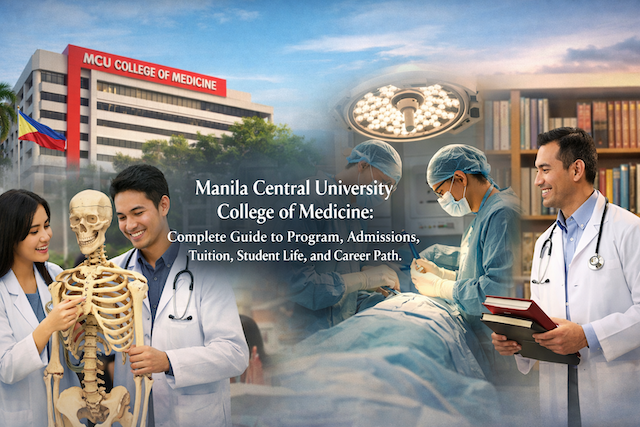
Manila Central University College of Medicine: Complete Guide to Program, Admissions, Tuition, Student Life, and Career Path
Contents
- Manila Central University College of Medicine: Complete Guide to Program, Admissions, Tuition, Student Life, and Career Path
- Overview of Manila Central University College of Medicine
- What You Study: Doctor of Medicine (MD) Program Structure
- Typical Subjects and Learning Areas
- Clinical Training and Clerkship Experience
- Admissions: Eligibility and Requirements
- Tuition, Fees, and Budget Planning
- Scholarships, Financial Aid, and Support
- Student Life at MCU: What Day-to-Day Often Feels Like
- How to Know if MCU College of Medicine Is Right for You
- Career Path After Graduation: PLE, Internship, Residency, and Beyond
- Practical Tips for Applicants and New Students
- Final Thoughts
- FAQs (Frequently Asked Questions)
- Where is Manila Central University College of Medicine located?
- What degree does MCU College of Medicine offer?
- What are the usual admission requirements for MCU College of Medicine?
- Is there a minimum NMAT score required?
- How long is the Doctor of Medicine program?
- What subjects will students study in medical school?
- When do students start clinical training?
- How much does it cost to study at MCU College of Medicine?
- Does MCU offer scholarships or financial assistance?
- Is MCU College of Medicine suitable for international students?
- What is student life like in Metro Manila during medical school?
- What happens after graduation from the MD program?
- How can applicants improve their chances of success in medical school?
Manila Central University College of Medicine: Complete Guide to Program, Admissions, Tuition, Student Life, and Career Path
Overview of Manila Central University College of Medicine
Manila Central University (MCU) is a long-established private university in the city of Caloocan, part of Metro Manila. Its College of Medicine is widely recognized for offering a traditional Doctor of Medicine (MD) pathway that combines foundational sciences, clinical exposure, and professional training designed to prepare students for the Philippine Physician Licensure Examination (PLE) and for future clinical practice. As a medical school located in Metro Manila, MCU benefits from proximity to major hospitals, specialist clinics, and public health networks—an advantage for students who want access to a broad range of patient cases and clinical learning environments.
If you are comparing medical schools in the Philippines, MCU is often considered by students who want a practical, city-based medical education without needing to relocate far from Metro Manila. It is also relevant for international students who prefer to stay within the capital region for convenience, transportation access, and exposure to a diverse patient population. Like other medical schools, admission is competitive and academic discipline is essential, but MCU appeals to students who value a straightforward, structured approach to medical training.
What You Study: Doctor of Medicine (MD) Program Structure
The Doctor of Medicine program in the Philippines generally follows a multi-year structure. While the exact sequencing and naming of subjects may vary by institution, the overall framework is typically similar across medical schools: pre-clinical years emphasize foundational medical sciences, followed by clinical years with hospital-based clerkship rotations, and then internship after graduation as required for licensure. MCU’s curriculum is designed to steadily build knowledge from basic sciences into clinical reasoning, patient communication, and safe medical decision-making.
In the early stage of the program, students focus on core medical science subjects. This phase is often called the “pre-clinical” period. The emphasis is on understanding the human body, the mechanisms of disease, and the scientific principles that will later support diagnosis and treatment decisions. Students commonly spend a significant amount of time in lectures, laboratory work, small-group discussions, and skills training.
As students advance, the program typically becomes more clinically oriented. This includes learning how to take patient histories, perform physical examinations, interpret laboratory and imaging results, and develop diagnostic impressions. Training also involves learning professional ethics, patient safety, medical documentation, and the basics of evidence-based medicine. By the time students reach the clinical stage, they are expected to apply scientific knowledge in real patient care settings under supervision.
Typical Subjects and Learning Areas
Medical education is intensive because it covers both broad foundational concepts and specialized clinical applications. While MCU may organize courses and timelines in its own way, students in a Philippine MD program generally encounter subjects that include:
- Anatomy (including gross anatomy and neuroanatomy) and laboratory work
- Physiology (how body systems function in health)
- Biochemistry (molecular processes, metabolism, and clinical relevance)
- Histology and Embryology (microscopic structures and development)
- Microbiology and Parasitology (infectious agents and immune responses)
- Pathology (mechanisms of disease, organ pathology, and lab correlations)
- Pharmacology (drug mechanisms, therapeutic use, and safety)
- Internal Medicine (adult diseases, diagnostic reasoning, chronic care)
- Surgery (perioperative care, basic procedures, surgical decision-making)
- Pediatrics (child health, growth and development, common pediatric conditions)
- Obstetrics and Gynecology (women’s health, pregnancy, and reproductive care)
- Psychiatry (mental health assessment, common disorders, patient communication)
- Preventive and Community Medicine (public health, epidemiology, population care)
In addition to these subjects, medical schools commonly include training in clinical skills, communication, ethics, and research literacy. Some schools also integrate case-based learning and early exposure to clinical settings, which helps students connect theory to real patient situations.
Clinical Training and Clerkship Experience
Clinical training is where medical school becomes “real” for most students. In the clinical phase, students rotate through major departments and learn under the supervision of licensed physicians and specialists. Students may assist with patient rounds, write notes, observe or assist in procedures, take patient histories, present cases, and learn how to work as part of a healthcare team.
A strong clinical environment matters because it shapes how students think, communicate, and act in patient care. Clinical rotations also help students explore specialties they may pursue later, such as internal medicine, pediatrics, surgery, obstetrics and gynecology, emergency medicine, and others. In Metro Manila, students may have access to a wide range of cases, including complex diseases seen in tertiary hospitals.
Clerkship is demanding. Students often have long days, early mornings, and frequent evaluations. However, it is also the stage when students develop practical competence—how to speak with patients, build differential diagnoses, interpret results, and learn safe treatment planning. Many students find that their confidence and maturity grow significantly during this period.
Admissions: Eligibility and Requirements
Medical school admissions in the Philippines usually require a completed undergraduate degree and a qualifying score from the National Medical Admission Test (NMAT). MCU generally follows this national framework. Applicants are typically evaluated through a combination of academic records, NMAT results, and school-specific screening processes.
While exact requirements can change from year to year, common admission components include:
- Completed bachelor’s degree (any major may be considered, though science backgrounds are common)
- Valid NMAT score (often with a minimum percentile requirement depending on the institution)
- Official transcripts and proof of graduation
- Application forms and personal information documents
- Interview or screening evaluation (varies by school)
- Other documents such as certificates of good moral character, recommendation letters, or medical clearance (often requested)
If you are applying, treat the process as competitive and professional. A strong NMAT score and solid academic record help, but medical schools also consider your readiness for the intensity of training. Interviews, when required, typically evaluate your motivation, communication, maturity, and ability to handle stress and responsibility.
Tuition, Fees, and Budget Planning
Tuition in Philippine private medical schools varies widely, and total costs include more than just tuition. Students should plan for laboratory fees, uniforms, medical instruments (like stethoscopes), books or digital resources, transportation, meals, and living expenses. During clinical years, additional costs may appear for hospital requirements, rotations, and board preparation resources.
Because medical school is a long-term financial commitment, it is smart to budget from the start. Even if a school’s tuition seems manageable, the hidden costs can add up. You should also consider the opportunity cost—medical school demands time and often limits the ability to work full-time.
To plan responsibly, many students create a simple annual budget that covers:
- Tuition and standard school fees
- Books, digital subscriptions, and printing
- Uniforms, lab coats, and basic medical tools
- Transportation costs for campus and hospital rotations
- Meals, housing, and daily expenses
- Review materials for major exams and licensure preparation
Scholarships, Financial Aid, and Support
Scholarships and financial support opportunities vary by institution and by student eligibility. Some medical students seek merit-based support, needs-based assistance, or external scholarships. Other students rely on family support, private loans, or structured payment plans.
If you are exploring MCU, it is worth checking what scholarship programs or tuition support options are available, and whether there are academic performance requirements to maintain such support. Regardless of where you enroll, having a financial plan reduces stress and lets you focus on studies rather than constantly worrying about costs.
Student Life at MCU: What Day-to-Day Often Feels Like
Medical student life is intense everywhere, but the daily experience differs by school culture and location. In Metro Manila, transportation and commute time can heavily affect your routine. Many students choose housing options that reduce travel time because medical school schedules can start early and end late.
Most medical students experience a repeating cycle: lectures, labs, quizzes, group study, self-study, and practical assessments. Your time management and discipline matter as much as intelligence. Students who thrive often build routines that include regular review, active recall, small-group learning, and healthy stress management habits.
Outside of academics, student organizations can play an important role. Medical student groups often focus on community outreach, clinical missions, health education, research interest groups, and leadership training. These activities can help you build a professional network and develop a stronger understanding of Philippine healthcare realities.
How to Know if MCU College of Medicine Is Right for You
Choosing a medical school is not only about the name. It is about fit: your learning style, location preference, financial situation, and long-term goals. MCU can be a good option if you want to study in Metro Manila, prefer a structured medical education path, and are looking for a school that supports your transition from theory to clinical practice.
Before deciding, consider these personal questions:
- Do you learn better in a structured program with clear expectations?
- Are you ready for a demanding schedule and consistent exams?
- Can you manage the total cost, including living expenses and clinical year requirements?
- Do you have the emotional resilience to handle clinical training and patient exposure?
- Do you plan to take the PLE and build your career in the Philippines?
If your answer is “yes” to most of these, and MCU’s environment matches your needs, it may be a strong contender on your shortlist.
Career Path After Graduation: PLE, Internship, Residency, and Beyond
Graduating from an MD program is a major milestone, but it is only one stage in the journey to becoming a licensed physician. In the Philippines, medical graduates typically proceed to a post-graduate internship (PGI) and then take the Physician Licensure Examination (PLE). Successful completion of these steps allows you to practice as a licensed physician.
After licensure, many doctors choose residency training to specialize in areas like internal medicine, pediatrics, surgery, obstetrics and gynecology, family medicine, emergency medicine, radiology, and more. Residency can be several years long depending on the specialty, and it is followed by potential fellowship training for further specialization.
MCU medical graduates may pursue clinical practice, hospital work, public health careers, research pathways, or academic medicine. Some doctors later expand into health administration, medical education, entrepreneurship, or global health work. Your medical degree opens multiple career doors, but the direction depends on your strengths and interests.
Practical Tips for Applicants and New Students
If you plan to apply to MCU College of Medicine, your preparation should be both academic and lifestyle-based. Medical school success is built on consistency, not last-minute cramming. Here are practical tips that often help:
- Prepare early for NMAT. A strong score expands your options and reduces admission stress.
- Practice study systems. Use active recall, spaced repetition, and frequent practice questions.
- Build a schedule that protects sleep. Chronic sleep deprivation destroys learning efficiency.
- Plan your commute. If possible, reduce travel time during heavy weeks.
- Develop professional habits. Communication, punctuality, and teamwork matter in clinical settings.
- Keep your motivation clear. Medical school is a marathon; you need a strong “why.”
Final Thoughts
Manila Central University College of Medicine can be a practical choice for students who want to complete their Doctor of Medicine training in Metro Manila while developing the academic foundation and clinical competence needed for licensure and long-term medical practice. The curriculum pathway, clinical exposure, and training culture aim to shape students into safe, ethical, and capable physicians.
To make the best decision, treat MCU as one option within a wider comparison: look at admission requirements, total costs, clinical training opportunities, learning culture, and your personal readiness. If the environment matches your needs and goals, MCU can serve as a strong stepping stone toward becoming a licensed doctor in the Philippines.
FAQs (Frequently Asked Questions)
Where is Manila Central University College of Medicine located?
Manila Central University (MCU) is located in Caloocan City, Metro Manila, Philippines. Caloocan is part of the National Capital Region, which means students have access to a large urban healthcare environment. Studying in Metro Manila can be helpful because hospitals and specialty clinics are widely available, patient diversity is high, and transportation options are generally flexible. However, city-based study also means students should plan carefully for commuting time, traffic, and living arrangements, especially once clinical duties begin and schedules become less predictable.
What degree does MCU College of Medicine offer?
MCU College of Medicine offers a Doctor of Medicine (MD) degree. The MD program is the standard professional degree required to become a physician in the Philippines. After completing the MD program, graduates typically proceed to a post-graduate internship (PGI) and then take the Physician Licensure Examination (PLE). Passing the PLE is required to practice as a licensed doctor in the Philippines. Some graduates also pursue residency training afterward to specialize in fields such as internal medicine, pediatrics, surgery, obstetrics and gynecology, family medicine, or other clinical disciplines.
What are the usual admission requirements for MCU College of Medicine?
Medical school admissions in the Philippines generally require an undergraduate degree and a valid National Medical Admission Test (NMAT) score. Applicants commonly submit official academic records, proof of graduation, and required forms. Many medical schools also require an interview or screening process to assess motivation, communication ability, maturity, and readiness for medical training. Requirements may vary by year, so applicants should confirm the latest document checklist and deadlines before applying. If you are an international applicant, you may also need to prepare additional paperwork such as passport documents and academic equivalency materials.
Is there a minimum NMAT score required?
Most Philippine medical schools set a minimum NMAT percentile, but the exact cutoff can depend on the institution and the year’s applicant pool. In practice, a higher NMAT score improves your admission chances and gives you more flexibility across multiple medical schools. Even if you meet a minimum requirement, admissions decisions often consider the full profile, including undergraduate grades, interview results, and overall readiness. If your NMAT score is not as competitive as you want, many students retake the NMAT to strengthen their application.
How long is the Doctor of Medicine program?
In the Philippines, the MD program is commonly structured over several years, with pre-clinical training followed by clinical clerkship. Pre-clinical years focus on foundational medical sciences and early clinical skills, while later years emphasize hospital-based learning through rotations. After completing the MD program, graduates typically go through a post-graduate internship (PGI) before taking the Physician Licensure Examination. Because the path includes both academic training and clinical stages, students should plan for a multi-year commitment with a heavy weekly workload.
What subjects will students study in medical school?
Students typically begin with core medical sciences such as anatomy, physiology, biochemistry, histology, microbiology, parasitology, pathology, and pharmacology. These subjects build the scientific foundation needed for clinical practice. As the program progresses, the curriculum becomes more clinically focused, covering internal medicine, surgery, pediatrics, obstetrics and gynecology, psychiatry, and community medicine or public health. Students also train in clinical skills such as history taking, physical examination, medical documentation, ethics, and patient communication. Many programs include case discussions to develop clinical reasoning.
When do students start clinical training?
Clinical exposure generally increases as students move into the later phases of the MD program. During the clinical clerkship period, students rotate through major departments and learn under supervision in hospital environments. In clerkship, students participate in ward rounds, observe and assist with procedures when appropriate, write clinical notes, and present patient cases. The level of responsibility increases gradually, and professionalism becomes a key part of evaluation. Students should expect long hours and demanding schedules, especially during busy rotations such as internal medicine, surgery, and obstetrics.
How much does it cost to study at MCU College of Medicine?
Total cost includes tuition plus additional fees and living expenses. Beyond tuition, students should budget for uniforms, lab coats, books or digital resources, printing, equipment such as a stethoscope, transportation, meals, and housing. Clinical years can include extra costs due to hospital requirements and rotation-related expenses. Because the cost structure may change over time, it is best to check official school updates for the most accurate fee schedule. Financial planning matters because medical school is a long-term commitment that can be stressful without a clear budget.
Does MCU offer scholarships or financial assistance?
Scholarship availability depends on school policy and student eligibility. Some medical schools provide merit-based scholarships for high academic performers or needs-based support for qualified applicants. There may also be external scholarships from foundations or government-related programs. If you plan to rely on financial assistance, confirm what options exist, what documents are required, and whether maintaining a scholarship requires meeting grade or conduct standards. Even without scholarships, some students explore installment plans or structured payment arrangements if offered by the institution.
Is MCU College of Medicine suitable for international students?
MCU’s Metro Manila location can be attractive to international students who want access to an urban environment and major hospitals. However, international applicants should prepare for additional administrative steps, such as document authentication, academic equivalency requirements, and immigration or visa processes. Daily life also requires cultural adaptation, especially in communication styles, clinical etiquette, and patient interaction. While medical terms are often taught in English, students may encounter Filipino languages in clinical settings, so being open to learning basic local communication can be helpful.
What is student life like in Metro Manila during medical school?
Student life is often structured around academics, frequent assessments, and group study. In Metro Manila, commuting and traffic can significantly affect time management, so many students prioritize housing that reduces travel time. Students often balance lectures, laboratory sessions, and independent review with peer discussion and practice questions. Organizations and outreach activities can provide variety and professional growth, but students must manage time carefully to avoid burnout. Successful students typically build consistent routines, protect sleep as much as possible, and use efficient learning techniques like spaced repetition.
What happens after graduation from the MD program?
After completing the MD program, graduates typically proceed to a post-graduate internship (PGI) and then take the Philippine Physician Licensure Examination (PLE). Passing the PLE is required to become a licensed physician in the Philippines. After licensure, many doctors enter residency training to specialize. Residency is demanding but essential for those pursuing hospital-based specialist careers. Other graduates may choose general practice, public health roles, research, academic work, or healthcare administration. Your long-term direction depends on your interests, performance, and preferred working environment.
How can applicants improve their chances of success in medical school?
Preparation should include both academic readiness and lifestyle planning. Academically, applicants benefit from strong NMAT preparation and consistent study habits. Once enrolled, the best approach is steady review rather than last-minute cramming, using active recall and practice questions to build exam confidence. Lifestyle planning matters as much as academics: manage commuting time, build healthy routines, and seek support from classmates when workloads become heavy. Medical school is a marathon, so sustainable habits, stress management, and clear motivation are key to long-term success.
Complete List of Medical Schools in the Philippines (All 78 MD Programs)
Best Medical Schools in the Philippines (Local & International Rankings)
Recommend
2026年1月23日
Sultan Kudarat State University College of Medicine: Complete Guide for Aspiring MD Students
2026年1月23日
University of Southern Mindanao College of Medicine: Complete Guide for Aspiring MD Students
2026年1月23日
Mindanao State University – General Santos College of Medicine: Complete Guide for Future MD Students

How to Register for eTravel Philippines (2025 Guide)
Step-by-step guide to completing your eTravel registration before arriving in the Philippines, with images and tips.

Night Market in Cebu – Things You Don’t Know About Cebu Life
Discover the hidden charm of Cebu’s night markets, from street food stalls to local life tips you won’t find in tourist guides.

How to Use ChatGPT for IELTS Preparation: A Complete Guide
Learn how to prepare for IELTS using ChatGPT — including strategies for Writing, Reading, Listening, Speaking, and grammar support.

How to Build a Website Without Coding Using ChatGPT
Discover how to build your own website using AI—no coding skills needed. From structure planning to SEO and design, let ChatGPT guide you.